Pull up four different real estate sites and search "Bellemont, AZ." One tells you the median list price was $480,000 as of July 2026. Another puts the median sale price at $559,665 as of May 2026. A third, pulling from the regional MLS in mid-July 2026, lands near $522,000. A fourth, drawing on listings active around the same time, averages closer to $696,000. None of these numbers are wrong. They are just not describing the same place.
That is the actual friction here, and it matters more than the usual explanation for conflicting real estate data. This is not a case of seasonal thinness distorting a small sample, and it is not four companies doing math differently on the same pool of homes. It is a mapping problem. Several of these tools are quietly folding neighborhoods from the opposite side of Flagstaff into their idea of "Bellemont," and once you see which listings are getting swept in, the wide price range stops looking like noise and starts looking like two entirely different housing markets sharing one name.
The town the number is supposed to describe
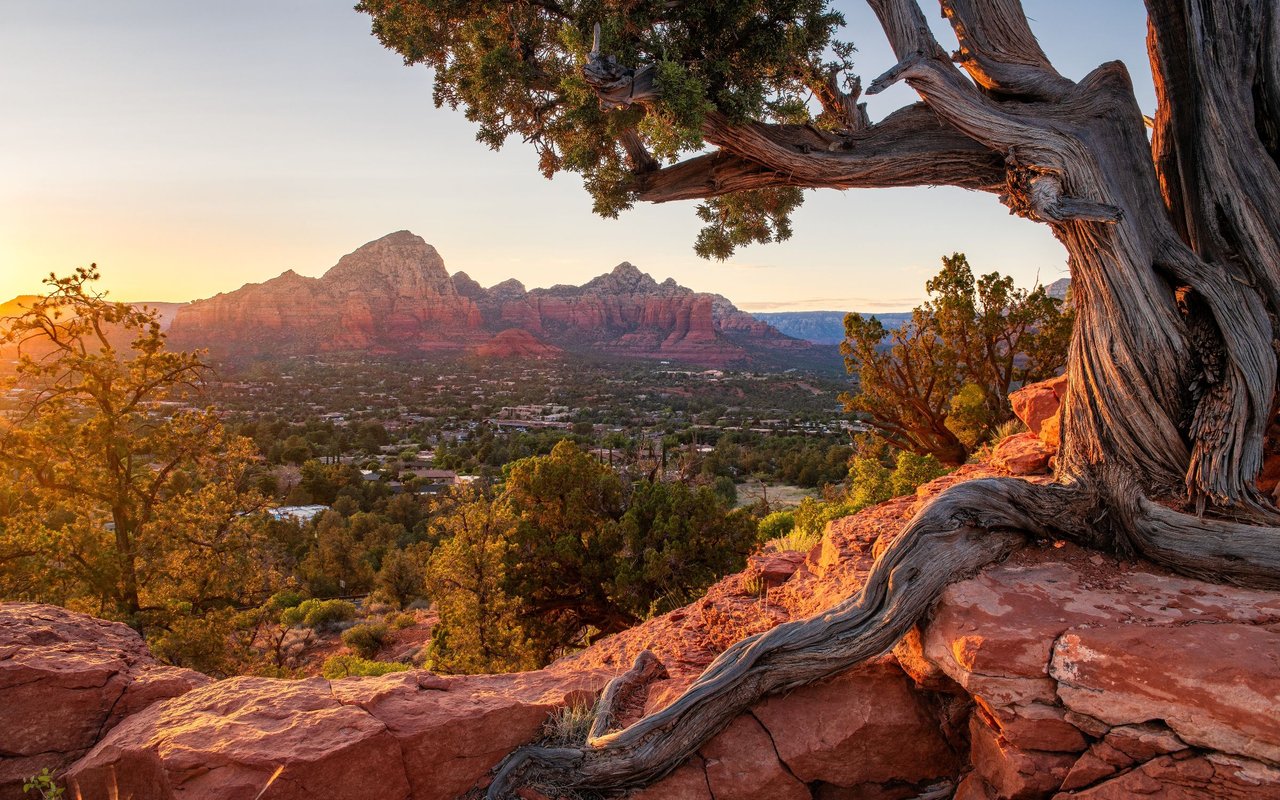
Real, unincorporated Bellemont sits about 11 miles west of downtown Flagstaff along Interstate 40, on the historic Route 66 corridor, at roughly 7,000 feet in the ponderosa pine belt. Its anchor institution is Camp Navajo, a 28,473-acre Army National Guard installation that has occupied the same site since 1942, when it opened as the Navajo Ordnance Depot storing ammunition for the Pacific Theater. That is what puts Bellemont on a map at all: a military installation, a handful of newer residential subdivisions clustered around it, and easy highway access to Flagstaff for work, school, and everything else.
That is a small, specific footprint. It does not include golf courses. It does not include downtown. And that is exactly where several data feeds go wrong.
Where the wrong neighborhoods get pulled in
One widely used portal's list of the "best and safest neighborhoods" in Bellemont includes Continental Country Club Estates, Downtown Flagstaff, Railroad Springs, Sunnyside, Elk Run, and Boyington Heights. Every one of those is a Flagstaff neighborhood, not a Bellemont one. Continental Country Club itself, the 18-hole course the estates are named for, sits below Mount Elden on the east side of Flagstaff, reachable from I-40's exit 201 onto Country Club Drive. That is on the opposite edge of the metro area from Camp Navajo, more than ten miles from anything a longtime Bellemont resident would recognize as their town.
This is not a conspiracy or an intentional inflation of the market. It is almost certainly a byproduct of how MLS area codes and ZIP boundaries get parsed by automated tools, which can bundle wide swaths of listings under one label because the underlying geographic tagging is coarser than the neighborhoods it is trying to describe. But the effect on a buyer is the same regardless of the cause: if your comp set for "Bellemont" secretly includes homes on a golf course near Mount Elden, your sense of what a Bellemont home actually costs is going to run high, and your sense of what it actually looks like is going to be wrong entirely.
What real Bellemont contains
Strip out the misfiled listings and the actual Bellemont housing stock breaks into three named developments, each a genuinely different product with a different cost structure.
Village Camp Flagstaff is the newest and least conventional. Built by Roberts Resorts and Communities on a 50-acre site surrounded by Coconino National Forest, it offers park-model cabins constructed by Cavco Industries starting near $219,000 for a 399-square-foot unit, with larger floor plans running up to 946 square feet. The plan calls for up to 125 site-built single-family homes among 279 total lots, and ownership comes with a $725 monthly HOA that covers a clubhouse, bar and bistro, pool, and hot tub. That HOA figure changes the math on the low sticker price considerably. A $219,000 cabin with a $725 monthly fee carries a very different carrying cost than a $420,000 townhome with a typical $100 to $300 monthly HOA, even though the portal median treats both as comparable "Bellemont" inventory.
Shadow Mountain Village is the middle tier. When it broke ground, the Arizona Daily Sun reported in January 2021 that the 94-unit townhome community, about a quarter of which backs directly to National Forest land, was pricing units from the high $200,000s at 1,600 to 1,818 square feet. Today, listings and recent sales in Shadow Mountain Village run roughly $420,000 to $500,000. A second phase of 84 additional homesites has since been added. The appreciation there tells you something the median never will: even the most affordable new construction in Bellemont has moved substantially in five years, and it moved without any help from misattributed golf-course comps.
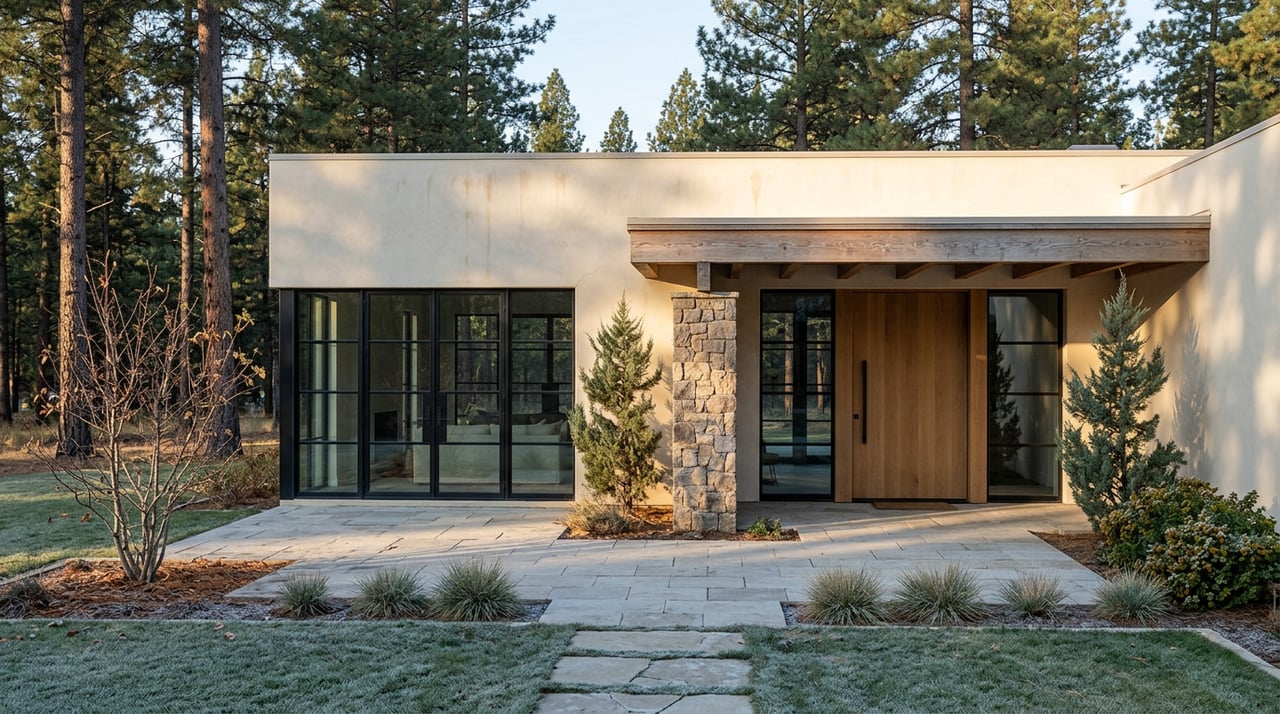
Flagstaff Meadows sits at the top of the traditional single-family range, with homes built by Capstone Homes starting in the low $500,000s. The builder earned an Honorable Mention in the Department of Energy's 2018 Housing Innovation Awards, and homes there are built to Zero Energy Ready Home standards, meaning they are certified to reach net-zero energy use with the addition of solar panels. Attached townhomes within the same community have listed starting in the low $400,000s.
Line those three up and you get a real, coherent price ladder for Bellemont: roughly $219,000 to $345,000 for a cabin at Village Camp, $420,000 to $500,000 for a townhome in Shadow Mountain Village or the Flagstaff Meadows townhome section, and low $500,000s and up for a single-family home in Flagstaff Meadows. That ladder is narrower, more logical, and more useful to a buyer than any single blended median, because it tells you what you actually get at each price point instead of averaging a cabin, a townhome, and a golf course estate into one meaningless number.
What this means if you are comparing Bellemont to somewhere else
If you are cross-shopping Bellemont against other Flagstaff-area communities, the practical move is to ignore the headline median entirely and ask which of the three real products you are actually looking at. A $480,000 median list price sounds like it describes a modest single-family home. In real Bellemont, that number sits almost exactly between a Shadow Mountain Village townhome and an entry-level Flagstaff Meadows house, which is a coincidence of averaging, not a description of what $480,000 buys. A $696,000 average, on the other hand, is almost certainly being pulled upward by listings that were never in Bellemont at all.
The same caution applies in reverse. If a listing description says "Bellemont" but the address, subdivision name, or map pin points toward Mount Elden or downtown Flagstaff, you are not looking at the community anchored by Camp Navajo. You are looking at a Flagstaff neighborhood that got tagged with the wrong label somewhere upstream in the data pipeline.
A few questions worth asking before you anchor on any number
Is this listing actually in the town, or in the ZIP code? Ask for the subdivision name. Village Camp Flagstaff, Shadow Mountain Village, and Flagstaff Meadows are the three that exist inside real Bellemont. If the answer is something else entirely, confirm the physical location before comparing prices.
What does the HOA actually cover, and how does it change the real monthly cost? Village Camp's $725 monthly fee is materially different from the more typical fees attached to Shadow Mountain Village and Flagstaff Meadows, and it belongs in any apples-to-apples comparison of what a given price point actually costs to own.
Is the home built to a standard that affects long-term costs? Flagstaff Meadows' Zero Energy Ready Home certification is a specific, verifiable feature that can affect utility costs for years. Not every builder in the area offers that, and it is worth asking about directly rather than assuming.
The takeaway
Bellemont's real estate story is not about a volatile market. It is about a place whose name is being borrowed by data that was never scoped to describe it. Once you separate the actual Bellemont, the small community west of Flagstaff built around Camp Navajo and three specific residential developments, from the golf-course and downtown Flagstaff listings that keep getting swept into the same label, the wide-ranging medians stop looking contradictory and start looking like exactly what they are: an averaging error, not a market signal.
If you are weighing Bellemont against another Flagstaff-area community and want a straight answer about what a given price point actually buys there, Justin Bemis Real Estate Team can walk you through the real comparison, subdivision by subdivision, before you anchor a search on a number that was never describing the town you meant.