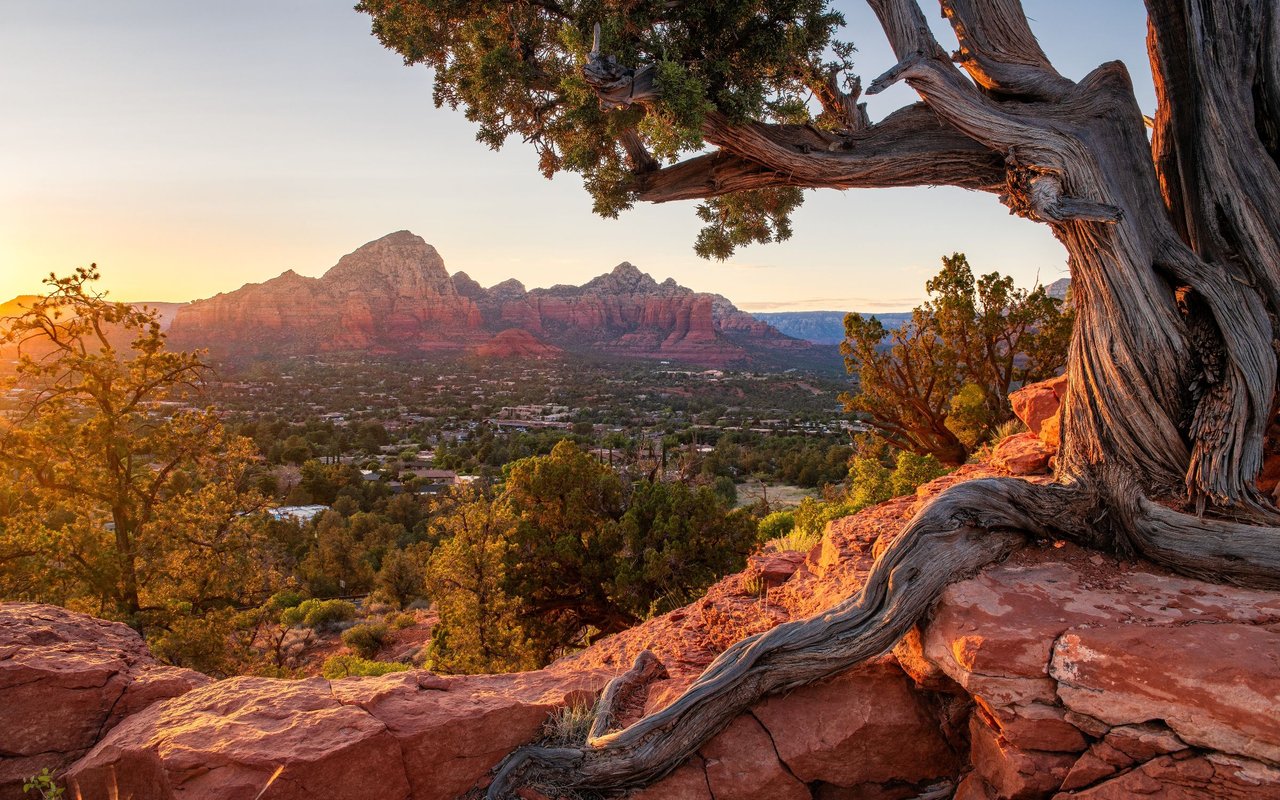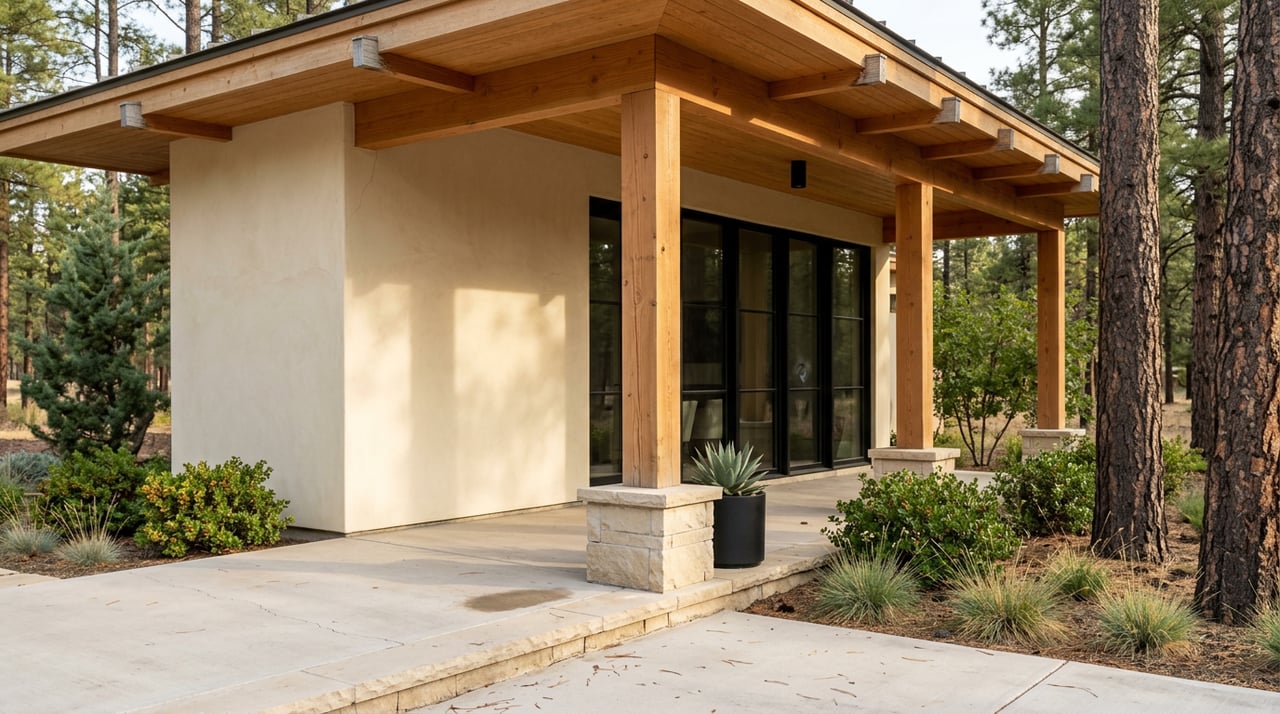
At the top of the ramp off Interstate 40 Exit 185, the temperature reading in the truck usually drops a few degrees before you've even parked. That is not a marketing line. Bellemont sits at 7,132 feet, and the National Weather Service's Flagstaff forecast office is physically here, on the north side of the highway. When residents talk about summer in Bellemont, they are describing a weather regime that is genuinely different from what people 30 minutes down in the Verde Valley are living through, and the rest of the season runs on that difference.
This post is for people who already live here and are trying to figure out what is worth doing between now and September, when the monsoon breaks and the calendar shifts.
The clock runs on the monsoon, not the event page
July and August are the wettest months of the Bellemont year. Storms build over the San Francisco Peaks by early afternoon and drift west across the Camp Navajo grasslands and the Village Camp property before losing steam near Parks. The practical effect for a resident weekend is that outside plans have a window, and the window closes around 2 p.m. more often than it doesn't.
That shapes everything else in this guide. The trailhead runs, the gravel loops, the amphitheater seating at Village Camp, the drive-over-to-Williams day trips — they all work better as morning commitments. Anything worth doing outdoors in August is worth doing before lunch.
A second point of local physics worth naming. Bellemont pulls some of the heaviest snowfall along I-40 in Arizona, and the same elevation that produces those winter numbers keeps average summer highs in the low 80s. You do not need air conditioning here the way you need it in Prescott Valley. Evenings on a covered deck are the default entertainment, not a fallback.
Village Camp is the thing that changed
The single largest addition to summer life in Bellemont in the last few years is Village Camp Flagstaff, which opened in 2023 on Forest Road 171, north of I-40. It reads on paper as an RV and cabin resort. In practice, for residents, it functions as the closest thing Bellemont has to a town center.
What is actually usable on a weekend, without staying overnight:
- Basecamp Bistro and Bar. Open for breakfast, lunch, and dinner. The menu runs to coffee, cocktails, pizzas, sandwiches, shareables like nachos and wings, and kid-friendly plates. The clubhouse has floor-to-ceiling windows over the property.
- The general store. Small, well-stocked, and closer than driving into Flagstaff for a forgotten ingredient.
- The amphitheater. Rotating live music and outdoor movies through the summer. Programming is heavier on weekends.
- Pool and hot tub. The outdoor pool is seasonal with a mountain view. The hot tub runs year-round.
- Pickleball and basketball courts, playground, event lawn. Guests get first call on equipment, so bring your own paddle if you are dropping in.
The property is set among ponderosa pines with sight lines to Humphreys Peak, and the layout stays uncrowded even at capacity, which is a real difference from a summer Saturday at a Flagstaff city park.
One caveat worth knowing before you head over on a Friday night: some guests report train noise carrying across the property after dark. The BNSF main line runs south of I-40, and sound travels farther in cool mountain air than most newcomers expect. If you are meeting friends for a late set at the amphitheater, that is context, not a warning.
The single date to plan around: August 22
If there is one item on the Village Camp summer calendar that is worth blocking off, it is the Village Gravel Race on Saturday, August 22. Gravel riding has quietly become one of the strongest recreational currents in Northern Arizona, and Bellemont's road network — the paved and unpaved sections of old Route 66, the forest roads out past Camp Navajo, the Coconino National Forest doubletrack — is genuinely good terrain for it. A destination gravel event based out of Village Camp means road closures, additional traffic on Bellemont Standpipe Road and adjacent forest roads for staging, and a very full bistro that evening.
Two ways to use the date if you live here:
- Register and ride. The course puts you on ground you probably already drive.
- Stay off the forest roads that morning and use the afternoon for errands into Flagstaff, since eastbound I-40 will be busy with riders and support vehicles heading back.
Oktoberfest programming follows in the fall, and the summer schedule has also included Father's Day weekend, a Fourth of July "Stars, Stripes and Campfire Nights" celebration marking America's 250th, and weekend rotations of pickleball tournaments, kids' crafts, bingo, line dancing, fitness classes, and movies under the stars.
The Route 66 centennial, felt from the highest point on the road
2026 is the Route 66 centennial year, and while Williams and Flagstaff have been running the loudest programming, Bellemont holds a claim neither can match. This stretch of the Mother Road includes the highest point on the entire alignment, at roughly 7,405 feet, and the old 1941–1964 concrete is still driveable for about four miles south of I-40 at Exit 185.
For a resident, the centennial mostly means an increase in slow-moving traffic on old Route 66 through August, especially motorcycle groups routing between Williams and Flagstaff. It also means the two anchor stops on that stretch are busier than usual:
- Grand Canyon Harley-Davidson, with its red caboose out front and the muffler tree next to it, sells and rents bikes and functions as a de facto centennial pilgrimage stop. Expect a full parking lot on Saturdays.
- Route 66 Roadhouse, adjacent to the Harley dealer, has been a local landmark since Felix and Lori Mansene built it in 1996. Operating status has shifted in recent years, so call ahead if you are counting on it for a group dinner rather than assuming it is open.
If you want the centennial without the traffic, the quieter move is to drive the western dead-end section past Camp Navajo in early morning. That stretch is cut by I-40 and does not carry through traffic, and the views toward Kendrick Peak and Mount Sitgreaves are worth the ten minutes.
What a resident summer Saturday actually looks like
A workable shape for the next six weekends, given the monsoon window:
Morning (before 11): trail miles or gravel loops out of the Coconino National Forest access points, or a bistro breakfast at the Village Camp clubhouse if the storms already look organized on radar.
Midday: grocery run or errands into west Flagstaff. Route 66 through Bellemont moves faster than I-40 westbound on centennial weekends.
Afternoon storm window (roughly 1 to 4 p.m.): covered deck, hot tub at Village Camp if you are a member or a guest, or an unhurried lunch inside. This is not a period to plan a long drive.
Evening: amphitheater music or a movie under the stars if it is on the schedule. Otherwise, one of the darkest-sky settings within 15 minutes of a paved road. Lowell Observatory's Open Deck program runs nightly in Flagstaff, but honestly, the view from a Bellemont driveway on a clear night is not far behind.
One quiet advantage of living here right now
The reason Bellemont feels different from Flagstaff this summer is not that it has more happening. It has less. Village Camp adds an anchor without adding density. The centennial traffic passes through on the way to somewhere else. The weather station up the road is a reminder that the elevation is doing work you do not need to think about. Residents get the summer without paying the summer tax that downtown Flagstaff pays in parking and crowds.
That is a livability point that does not usually make the marketing brochures, and it is worth naming while it is still true.
If you are weighing what a home in Bellemont actually offers over the course of a full year, or you are thinking about how a property here fits into a Northern Arizona second-home or investment plan, the team at Justin Bemis Real Estate Team knows this pocket of Coconino County in detail and would be glad to talk through it. Contact us when you are ready.