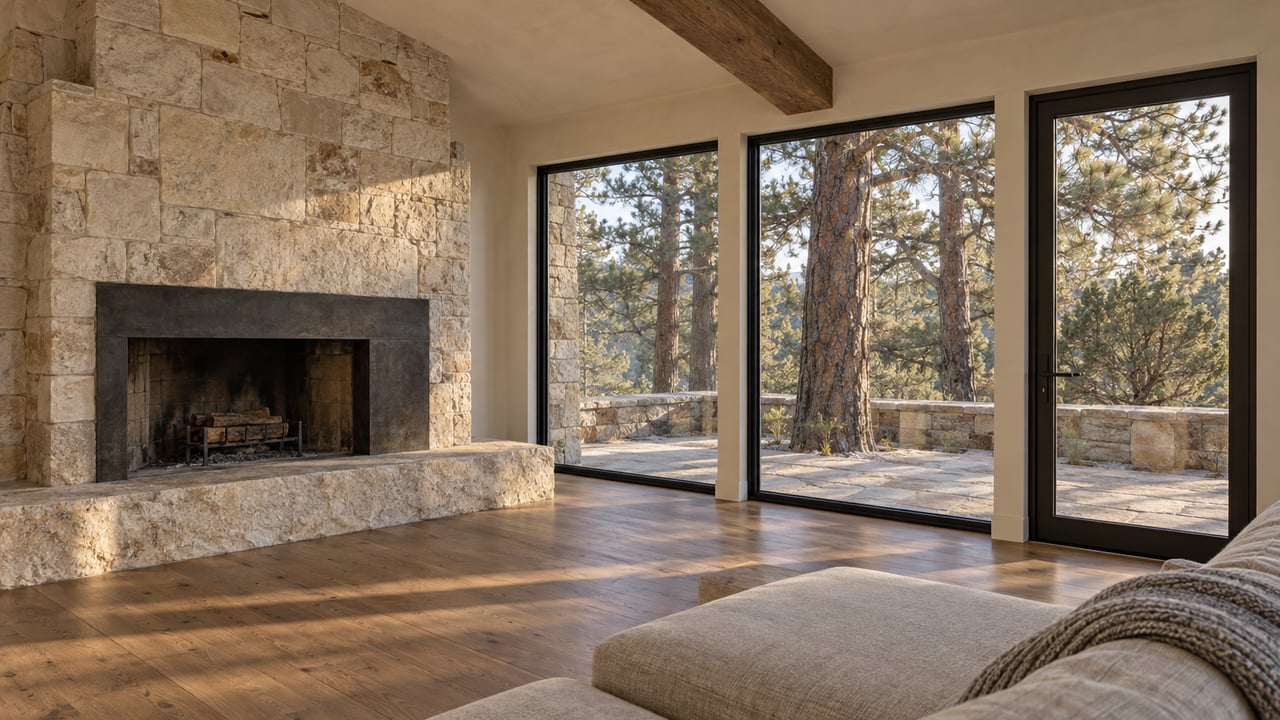
Picture a Sedona listing that reads "main house plus guest casita, ideal for dual STR income." An investor closes on it, applies for a second short-term rental permit for the casita, and gets denied. The Short Term Shop reports that the casita qualifies as an accessory dwelling unit that received its certificate of occupancy after September 14, 2024, and under Sedona's rules it can operate as a short-term rental only if the owner lives in the main house full time.
This rule is one part of Sedona's local short-term rental framework. Senate Bill 1350, passed in 2016, preempts Arizona cities from banning short-term rentals outright or capping how many permits they issue. SB 1350 addresses citywide bans and permit caps; local decisions since then have also shaped which rentals can be added and what it costs to hold them.
What the state law actually covers
SB 1350 stops Sedona from telling an owner they can't operate a short-term rental or from telling the city there's a permit cap. It says nothing about which properties are eligible to apply for a permit in the first place, what a developer agrees to as a condition of a zoning change, or how a city chooses to spend its own incentive budget. Those are the areas where Sedona keeps its authority, and the city's recent decisions there affect the pool of usable inventory and the cost of holding a rental.
Three ways the city shapes STR supply within state law
The ADU restriction is the first. That closes off a category of supply that used to let one lot generate two rental listings.
The second came through a set of ordinance amendments the city council approved in March 2025. The changes barred advertising an STR as available for weddings or retreats, on top of the existing ban on hosting them. They also clarified how permits move at sale: if a property sells, the seller now has to take down every STR listing before the new owner can get a permit, so there's no gap where a buyer inherits an active listing without going through the application themselves. Councilman Derek Pfaff had proposed the package months earlier with a stated goal, to make it less desirable to own a short-term rental in Sedona.
The third example comes from a housing project reported by the Red Rock News. In February 2026, council approved a 51-unit workforce housing project on Goodrow Lane, developed by BCT Sedona Multifamily LLC and led by Basil and Mimi Maher. Half the units are deed-restricted as workforce housing for ten years, and the development agreement bans short-term rentals of fewer than 30 days for the life of the restriction.
It is still my intent that these projects not have any short-term rentals for the entire life of the project.
The Red Rock News reported this statement from Basil Maher as he addressed the council. Pfaff later cited the Goodrow deal as the reason he rejected a separate zoning request from other applicants who wanted the same density without a comparable STR restriction attached. The pattern is becoming a condition of doing business with the city on new residential density, not a rule written into the STR ordinance itself.
| When | What changed | What it does to STR supply or cost |
|---|---|---|
| September 2024 | New ADUs restricted from STR use unless owner-occupied | Closes off dual-listing potential on new construction |
| March 2025 | Permit non-transfer and event-ad rules tightened | Removes the transfer gap; adds compliance friction at resale |
| January 2026 | The City of Sedona introduced late renewal fees | Adds a $50 to $100 cost for late paperwork |
| February 2026 | Goodrow Lane development agreement bans STRs for 10 years | Sets a template for future zoning deals |
| Pending in the state Senate | House Bill 2429, passed the House 36-19 in March 2026 | Would let cities set occupancy formulas and double the enforcement record window |
Two STR counts that measure different things
In January 2025, Sedona's short-term rental specialist told the city council that growth in STR numbers had been fairly flat since the permit program launched. The council packet backed that up with a count of 1,211 identified STRs as of December 31, 2024, up only 6.4% from 1,138 in December 2018.
By February 2026, though, city and AirDNA-sourced data put active STR listings at roughly 1,805, up 62% from 1,113 listings in 2021. The two figures come from different sources and count different things, so they read differently. The permit count measures registered units going through Sedona's own system. The listing count measures what's actually live on booking platforms, including properties that may be operating under a permit issued to a prior owner, a room rented within an otherwise permitted home, or units the city hasn't yet caught up to enforcing against. An investor sizing up whether this market is saturated or still expanding needs to know which number they're looking at, because the permit-based picture presented at a January 2025 council meeting and the platform-listing count from February 2026 answer different questions.
Short-term rentals still matter enough to the city's finances that officials track them closely. At the retreat where council set its priorities for 2026, held in December 2025, staff reported that hotels and timeshares generate roughly 60% of the city's bed tax against STRs' 40%, though the split moves throughout the year. In January 2025, STRs actually out-collected hotels, $423,258 to $336,829. That seasonal swing is worth building into a revenue model rather than assuming a flat annual split.
Sedona's housing targets
A September 8, 2026 presentation to the council outlined the city's housing goals. Community Development Director Tony Allender and Housing Coordinator Laura Stewart brought a draft Balanced Housing Strategy with a target of 775 new housing units over the next decade, built around figures like a 2025 median age of 64.1 and a population that's 48.1% age 65 or older. The plan calls for raising the share of city residents under 65 to 60%, growing the number of critical employees who live in Sedona by 15%, and cutting the share of cost-burdened hospitality and service households by 25%.
Allender also recommended discontinuing Rent Local, a program that pays STR owners up to $10,000 a year for a three-bedroom unit to convert it to a long-term rental. The program has a $240,000 budget, and only $141,000 of it has been paid out because just 14 properties have used it. Staff will let the remaining funds run out rather than pulling the program immediately.
HOA rental rules also matter
None of this touches the risk that sits entirely outside city hall. SB 1350 protects an owner from the city, not from their own homeowners association. According to Rakidzich.com, a property's CC&Rs can prohibit short-term rentals outright or require board approval, and a city permit doesn't override those restrictions.
What this means before you make an offer
- Confirm whether any ADU or guest structure on the property received its certificate of occupancy before or after September 14, 2024, since that date determines whether owner occupancy is required to rent it separately.
- If the seller currently operates an STR, confirm they'll deactivate every listing before closing. The permit doesn't transfer, and a new owner can't get one approved while the old listings are still live.
- Pull the HOA's original CC&Rs and every amendment filed since, not just the version in the title packet, and search specifically for rental, lease, and minimum-stay language.
- Confirm which county side of Sedona the property sits on; the City of Sedona lists combined bed and lodging tax rates of about 13.325% on the Yavapai County side and 13.90% on the Coconino County side.
- Budget for the $210 annual permit fee reported by Lodgify and the $500,000 minimum aggregate liability coverage required by the City of Sedona, plus the new late-renewal fees that took effect January 1, 2026.
- Watch House Bill 2429 through the rest of this legislative session. It passed the Arizona House 36-19 in March 2026 and would let cities set occupancy formulas if it clears the Senate.
If the city allows STRs, can my HOA still stop me from operating one? Yes. State preemption limits what cities and counties can do, but it doesn't reach private CC&Rs. An HOA can restrict or ban short-term rentals through its governing documents regardless of what the city permits.
Sedona's short-term rental market is still open, still legal, and still generating serious tax revenue for the city. What's changed is the path to adding new inventory and the cost of holding what's already there. If you're weighing a Sedona purchase against these rules, the Justin Bemis Real Estate Team can walk through the specific parcel, its zoning history, and what a given HOA's documents actually allow before you write an offer.
This article is general information, not legal, tax or financial advice. Consult a qualified professional about your situation.